
9 Heritage Brands in Chinatown Singapore That Keep History Alive


Chinatown is often recognised for its temples, street markets and landmarks. However, the true spirit of Chinatown Singapore's history lives in its long-standing family businesses.
Early Chinese migrants built livelihoods in Chinatown through trades like goldsmithing, TCM, confectionery, incense-making, carpentry, and food hawking.
Many of these businesses have disappeared over the decades, but a small circle of them remains. Passed down through generations, these businesses remain in the hands of migrant descendants who preserve traditional methods and heritage.

Eu Yan Sang, Singapore — Image from euyansang.com
Eu Yan Sang
Few heritage brands capture the spirit of service and compassion in old Chinatown, Singapore, as clearly as Eu Yan Sang.
The first Eu Yan Sang medical hall in Singapore opened in 1910 along South Bridge Road. It fast became a trusted healthcare stop for migrant workers and was synonymous with Traditional Chinese Medicine (TCM) for generations.
Beyond selling herbal remedies, the original medical hall offered several other services such as affordable medical treatment and remittance services. It even helped illiterate migrants read and write letters home, making it an essential community anchor in old Chinatown.
The business now operates nearly 200 retail outlets across the region and continues its mission of “caring for mankind,” showing how a heritage brand can evolve with modern healthcare while remaining rooted in tradition and cultural identity.

Chop Wah On
Founded in 1916 by a migrant family, Chop Wah On began as a small traditional remedy shop. It helped coolies, rickshaw pullers, and labourers soothe muscle pains and injuries from long working hours.
Their signature products have been staples in Singapore for a century now, and include medicated oils, herbal balms, mosquito repellents, and chest rubs using recipes passed down through generations.
Today, the shop is run by descendants of the founder, reflecting the continuation of the family legacy and preservation of intangible heritage.
Like Eu Yan Sang, Chop Wah On has been a pillar of community wellness for decades. Long before modern clinics existed, migrant workers relied on their remedies for affordable care.
Modern customers continue to turn to it today for alternative wellness support. The brand has even launched new products based on more recent trends, such as an apitherapy ointment for pain.

On Cheong Jewellery, Singapore — Image from chinatown.sg
On Cheong Jewellery
Founded in 1936, On Cheong Jewellery is one of Singapore’s most enduring goldsmith houses.
In the early days of Chinatown, gold and jade were more than adornments. They were symbols of stability for migrant families and often served as forms of portable wealth.
The brand’s shop design and displays pay homage to 20th-century goldsmithing culture with velvet-lined trays and display lights echoing old-style counters.
The business has expanded and rebranded since, yet it remains rooted in its Chinatown foundations. It’s still run by second- and third-generation family members, who continue designing jewellery for the community’s weddings and milestones.
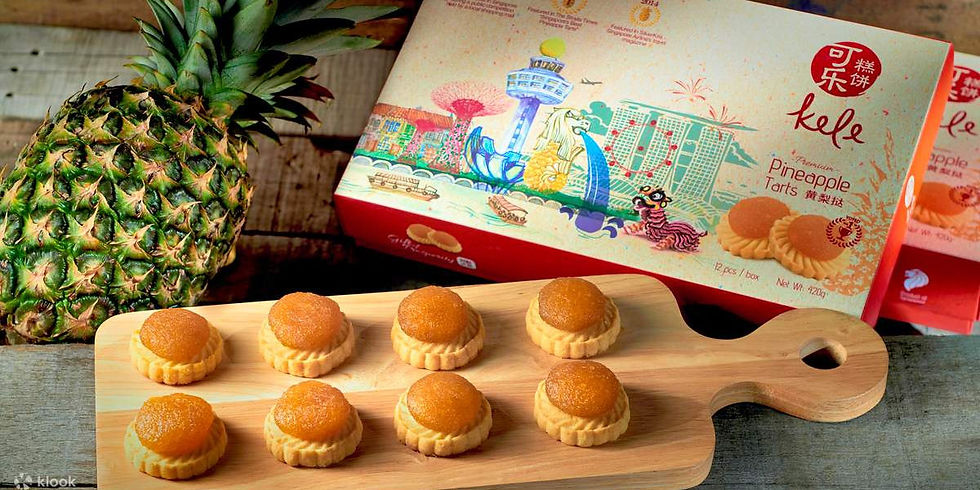
Kele Pineapple Tarts — Image from klook.com
Kele Pineapple Tarts
Established in 1983, but with deep roots in traditional baking culture, Kele remains one of the most recognisable brands in Chinatown’s heritage food scene.
Pineapple tarts have a symbolic meaning in Chinese culture – “ong lai", which means prosperity arrives, making them closely tied to Chinatown festive culture today.
Kele’s shop is often busiest during Chinese New Year, with pineapple tarts being one of the most popular festive goodies for the season.
Note that they also still innovate with modern flavours while honouring the original recipe –this blending of old-world approaches with modern tastes keeps culinary cultural heritage dynamic yet alive!

Pek Sin Choon, Singapore — Image from chinatown.sg
Pek Sin Choon
Established in 1925, Pek Sin Choon is one of Singapore’s oldest and most beloved traditional tea merchants.
Its origins reflect the resilience and dedication of the early Chinese migrant community. Pek Sin Choon remains under the stewardship of the fourth generation of the family.
Despite modernisation and the disappearance of many traditional trades, it remains one of the few surviving heritage tea companies in the district. One reason it has endured is its ability to stay relevant through tea tastings, educational experiences, and events that appeal to younger audiences.

Tin Sing Goldsmiths
This brand was founded in 1937 by the Wong, Wan, and Chow families along South Bridge Road. It quickly carved out a crucial place for itself in the community.
Before the rise of digital banking and modern investment tools, gold held strong economic and symbolic value within migrant communities, often serving as a portable store of wealth and a form of financial security. The shop became especially popular because it offered a guaranteed buyback policy, giving peace of mind to customers who treated gold as both an adornment and a source of financial security.
The brand continues to preserve craftsmanship that has become increasingly rare over the years. It also holds to its reputation for dependability. Many of their clients are long-time customers whose families have patronised the shop for decades.

Tai Chong Kok — Image from taichongkok.oddle.me
Tai Chong Kok
Since 1935, Tai Chong Kok has produced traditional mooncakes, Chinese biscuits, and festive sweets – traditional delicacies that are go-to snacks for many locals.
While production has evolved over the years, the brand continues to rely on hands-on techniques for its mooncakes, from preparing the lotus paste to carefully wrapping each salted egg yolk in manually rolled dough.
This attention to craftsmanship ensures their mooncakes remain just as delicious as they were in their founder’s time. Their recipes reflect the tastes that early customers associated with home, preserving a sense of culinary continuity across generations.

Bee Cheng Hiang
Bee Cheng Hiang started as a single pushcart selling bak kwa in 1933. The sweet and sugary jerky was sold the same way many of Chinatown’s favourite snacks were back then – right on the street for easy access on the go.
Today, Bee Cheng Hiang has expanded into an international brand, with retail outlets as far afield as China, Japan, and Korea. Yet its signature bak kwa remains closely tied to Chinese New Year rituals and homecoming traditions.
Today, it is both a familiar taste for locals and a cultural keepsake for travellers – a reminder of how Chinatown’s street-side trades shaped everyday life, and how businesses some have endured without losing their identity.

Spring Court Restaurant, Singapore — Image from singaporeatriumsale.com.sg
Spring Court Restaurant
Founded in 1929 at the iconic Great World Amusement Park, Spring Court is one of Singapore’s oldest surviving restaurants and a landmark in Chinatown's rich history.
For many families, dining at Spring Court during the Lunar New Year has become an intergenerational tradition. The restaurant’s longevity speaks to its ability to evolve while staying grounded in the flavours that generations of Singaporeans grew up loving.
Today, Spring Court is helmed by the third generation of the Ho family. They continue their mission of serving Cantonese dishes shaped by local tastes and carrying cultural memories through food.
Why Heritage Brands Matter to Chinatown’s Identity?
Heritage brands represent continuity between early migrant life and modern Singapore. Many of them preserve traditional skills and trades, such as artisanal approaches to goldsmithing and non-automated food production.
These brands’ stories contribute to a deeper understanding of Chinatown Singapore's history beyond tourist attractions, and hold sentimental value for older generations as well.
At the same time, these businesses are not merely shops – they are the pillars of Singapore's heritage, offering authentic cultural experiences for younger visitors curious about the history and culture of early Chinatown.
Discover More about Chinatown’s Heritage at The CHC
Learn more about Singapore’s heritage brands at the Chinatown Heritage Centre (CHC), where exhibitions reveal the stories behind the district’s oldest family businesses.
Immerse yourself in Chinatown’s history and see how these local institutions continue to keep tradition alive. Book a visit today.


Comments